Healthy Living
Health is more than the absence of disease.
What is good health?
Being healthy does not simply mean that you do not have a medical illness.
Good health means taking care of your whole self — your body, mind, relationships, and sense of purpose — so that you can live your life with energy, independence, and well-being.
Health can change throughout life. Even when you have a chronic medical condition, you can improve your health by learning to manage your condition and developing healthy habits.
The 5 areas of health
Think of your health as having five connected parts:
1. Physical health
Take care of your body by:
- Eating nutritious foods
- Being physically active
- Maintaining a healthy weight
- Getting adequate sleep
- Avoiding tobacco
- Limiting or avoiding alcohol
- Keeping up with recommended medical care and screenings
2. Mental and emotional health
Your mental health is an important part of your overall health. Helpful habits include:
- Learning ways to manage stress
- Recognizing and addressing anxiety, depression, or persistent sadness
- Taking time to relax
- Practicing mindfulness, meditation, breathing exercises, or other activities that help you feel calm
- Asking for professional help when you need it
Taking care of your mind is just as important as taking care of your body.
3. Social health
People generally do better when they have meaningful relationships and social connections. Try to:
- Stay connected with family and friends
- Spend time with people who support you
- Participate in community activities
- Ask for help when you need it
- Make time for relationships that are important to you
Strong social connections are associated with better health and well-being.
4. Purpose and spiritual well-being
For many people, health also includes having meaning, purpose, values, faith, or a sense of connection. This may involve:
- Prayer or spiritual practices
- Meditation
- Spending time in nature
- Helping others
- Practicing gratitude
- Connecting with a faith or community group
- Finding activities that give your life meaning and purpose
You do not have to follow a particular religion or spiritual practice. The important question is: “What gives meaning and purpose to my life?”
5. Your environment
Your health is also influenced by the environment in which you live, work, and spend your time. A healthy environment includes:
- Safe housing
- Clean air and water
- Opportunities for physical activity
- Access to healthy foods
- Supportive relationships and communities
- Access to appropriate medical care
Not every aspect of health is under an individual’s control. Social and economic circumstances can have a major influence on health.
The 7 healthy habits that make the biggest difference
You do not have to change everything at once. Start with one or two habits and build gradually.
1. Don’t smoke or use tobacco
- If you smoke, quitting is one of the most important things you can do for your health.
- If you need help quitting, talk with your healthcare professional.
2. Eat mostly whole, nutritious foods
Try to make most of your meals include:
- Vegetables and fruits
- Whole grains
- Beans and other legumes
- Nuts and seeds
- Fish and other healthy protein sources
- Healthy unsaturated fats
Try to limit highly processed foods, sugary drinks, added sugars, and processed meats. A simple rule: more foods that come from nature; fewer foods that are highly processed.
3. Move your body
Regular physical activity helps protect your heart, brain, muscles, bones, and overall health. A commonly recommended goal for adults is:
- 150–300 minutes of moderate physical activity each week
- plus muscle-strengthening activities at least 2 days each week.
You do not have to start there. Some activity is better than none. Walking, gardening, dancing, swimming, cycling, and household activities can all help you become more active.
4. Get good sleep
Most adults benefit from approximately 7 hours of regular, good-quality sleep each night. Helpful sleep habits include:
- Keep a regular sleep and wake time
- Create a relaxing bedtime routine
- Keep your bedroom comfortable and quiet
- Limit excessive screen use before bed
- Discuss persistent sleep problems with your healthcare professional
Sleep quality and regularity are important parts of overall health.
5. Manage stress
Stress is a normal part of life, but ongoing stress can affect your physical and emotional well-being. Try:
- Deep breathing
- Meditation or mindfulness
- Physical activity
- Spending time outdoors
- Talking with someone you trust
- Relaxing hobbies
- Maintaining healthy routines
If stress, anxiety, or depression is interfering with your daily life, talk with your healthcare professional.
6. Stay connected
- Make time for people who matter to you.
- Call someone. Have a meal together. Take a walk. Join a community activity. Help someone else.
- Small connections can make a meaningful difference in well-being.
7. Take care of your preventive health
Healthy living is only one part of healthcare. Depending on your age, sex, family history, and medical conditions, preventive care may include:
- Blood pressure checks
- Cholesterol testing
- Diabetes screening
- Cancer screening
- Immunizations
- Dental and vision care
- Medication review
- Regular healthcare visits
Ask your healthcare professional which preventive services are appropriate for you.
Your health checklist
Ask yourself
- Am I physically active most days?
- Am I eating mostly nutritious, minimally processed foods?
- Am I getting enough good-quality sleep?
- Do I avoid tobacco?
- Am I managing stress in healthy ways?
- Do I have people I can talk to and rely on?
- Do I have activities that give my life meaning and purpose?
- Am I keeping up with recommended medical care?
Remember: small changes add up
You do not need to become perfectly healthy overnight. Start small.
Walk 10 minutes. Eat one more serving of vegetables. Go to bed a little earlier. Call a friend. Take a few minutes to breathe. Schedule an overdue checkup.
Then build from there.
Healthy habits work together. People who combine several healthy lifestyle behaviors have substantially better long-term health outcomes than those who have few healthy behaviors.
The goal is not just to live longer. The goal is to live more years with good physical, mental, and social function.
Your healthcare team can help you identify the changes that are most appropriate for your age, medical conditions, medications, lifestyle, and personal goals.
Start with one healthy change today.
Happiness architecture

Psychological well-being
Psychological well-being is crucial for several reasons, impacting both individuals and society as a whole. Here are some key points highlighting its importance:

1. Mental health and quality of life
- Reduced mental illness: good psychological well-being decreases the risk of mental health disorders such as depression, anxiety, and stress.
- Improved quality of life: individuals with positive psychological well-being tend to have a higher quality of life, including better physical health, greater life satisfaction, and more meaningful relationships.
2. Physical health
- Better immune function: psychological well-being is linked to stronger immune systems, which helps in fighting off illnesses.
- Lower risk of chronic diseases: positive mental health is associated with a lower risk of developing chronic diseases like heart disease and diabetes.
3. Productivity and performance
- Workplace efficiency: employees with good psychological health are more productive, creative, and engaged at work.
- Academic success: students with high psychological well-being perform better academically, showing improved concentration, motivation, and overall school performance.
4. Social relationships
- Improved relationships: good mental health fosters better communication, empathy, and conflict resolution, leading to healthier personal and professional relationships.
- Community engagement: individuals with strong psychological well-being are more likely to participate in and contribute to their communities.
5. Resilience and coping
- Stress management: people with good psychological health can manage stress more effectively and recover from adversity more quickly.
- Adaptability: psychological well-being enhances one’s ability to adapt to changes and face life’s challenges with a positive outlook.
6. Economic impact
- Reduced healthcare costs: better mental health reduces the burden on healthcare systems by decreasing the need for medical and psychological services.
- Economic productivity: a mentally healthy population contributes more effectively to the economy, reducing absenteeism and increasing overall productivity.
7. Personal growth and fulfillment
- Self-actualization: good psychological well-being allows individuals to achieve personal goals and reach their full potential.
- Life satisfaction: it fosters a sense of purpose, fulfillment, and happiness, making life more enjoyable and meaningful.
Strategies to enhance psychological well-being
- Regular physical activity: exercise has been shown to improve mood and reduce symptoms of depression and anxiety.
- Healthy relationships: building and maintaining supportive relationships provide emotional support and increase feelings of belonging.
- Mindfulness and meditation: these practices help in reducing stress and enhancing emotional regulation.
- Professional help: therapy and counseling can be effective in addressing mental health issues and improving overall well-being.
- Healthy lifestyle choices: adequate sleep, a balanced diet, and avoiding substance abuse are critical for maintaining mental health.
In summary, psychological well-being is a foundational element for a healthy, productive, and fulfilling life. It not only affects individual health and happiness but also has far-reaching implications for society at large.
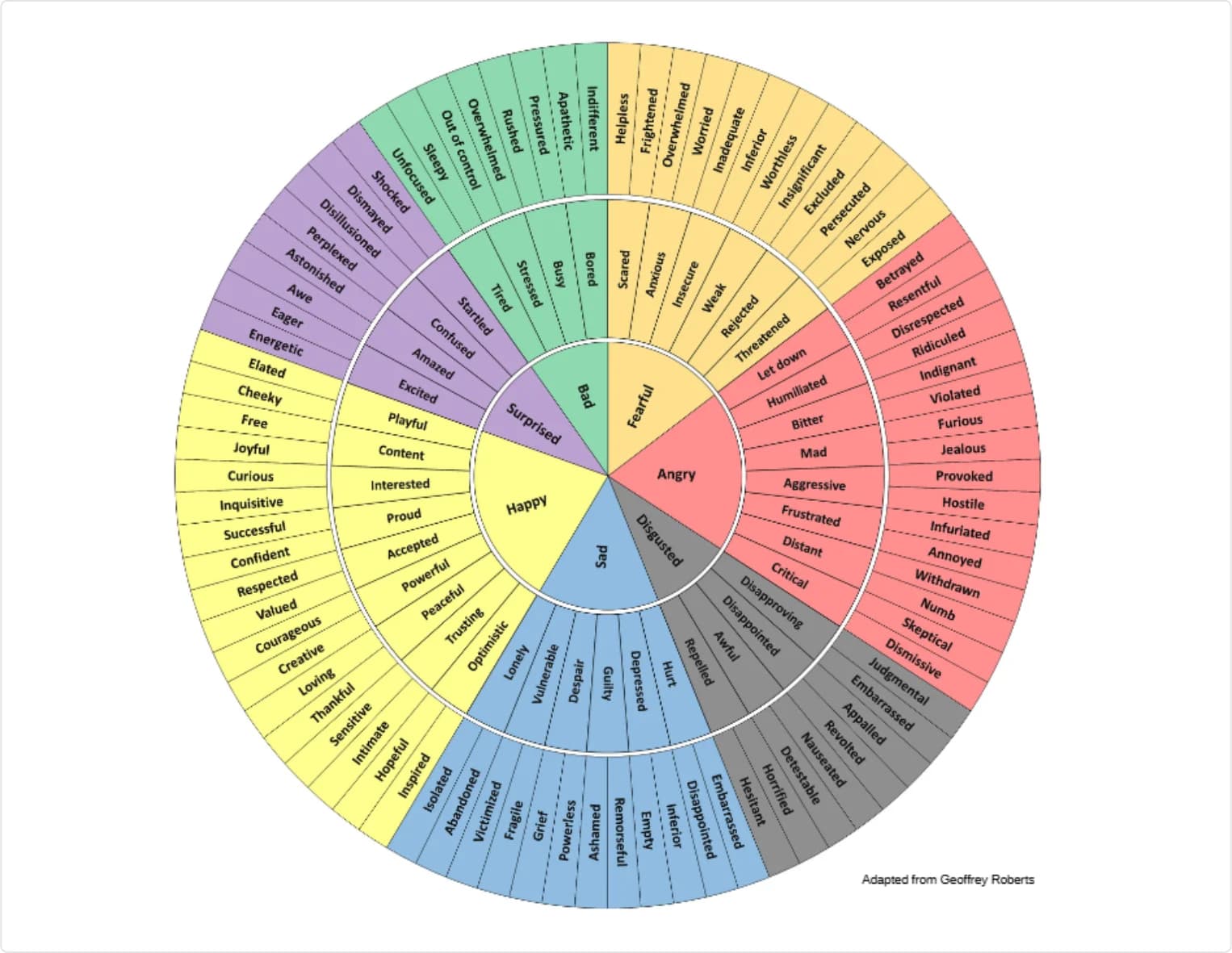
The feeling wheel
Manage your mind

Living with personal rules: demanding standards